
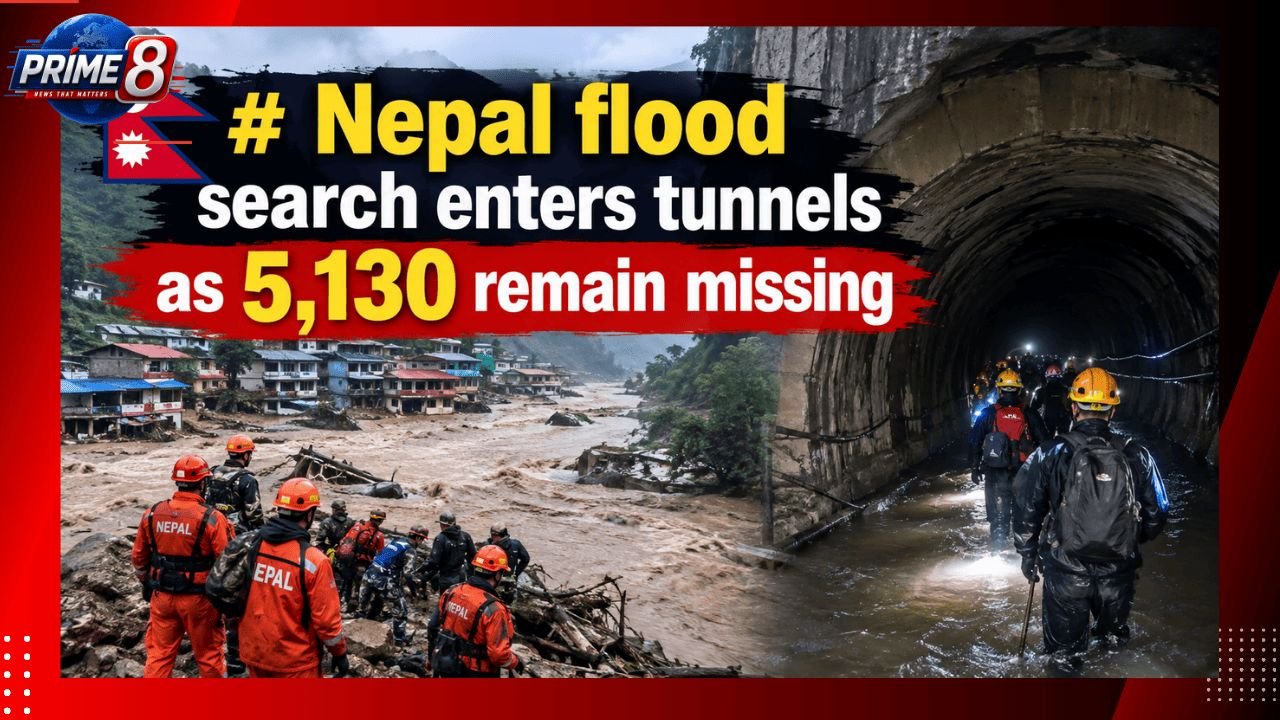
Search operations continued across Nepal on Saturday, more than two weeks after catastrophic flash floods devastated large parts of the country.
Authorities said nearly 1,400 people have died, while 13,676 people have been rescued so far. However, 5,130 people remain missing, including 589 foreign nationals from around 30 countries.
The floods were triggered by an ice-rock avalanche near the Nepal-Tibet border on August 26. The resulting surge of water from the Bhotekoshi River swept away homes, vehicles, roads and bridges, while severely damaging several hydropower projects.
Rescue operations have now moved underground, with teams searching inside tunnels at several hydropower projects in the flood-hit districts of Rasuwa and Nuwakot.
At the Chilime Hydropower Project, rescuers have entered a tunnel and advanced around 115 metres, clearing mud, rocks and debris. At the Upper Trishuli-1 project, a joint team including foreign technicians has moved around 400 metres into the main access tunnel.
Search operations are also underway at the Rasuwagadhi, Rasuwa Bhotekoshi, Langtang, Trishuli-3A and Upper Trishuli-3B hydropower projects.
But the operation remains extremely difficult. Buried structures, thick layers of mud and debris, damaged infrastructure and difficult terrain are slowing the rescue effort.
Meanwhile, identifying the dead has become another major challenge. Of the bodies recovered so far, only around 100 have been handed over to families.
Many bodies were severely damaged or decomposed after being swept downstream, while some were recovered only in parts. This has made identification through faces, clothing and personal belongings extremely difficult.
Forensic experts say DNA testing has become crucial in identifying the victims. However, the process is time-consuming as samples from the remains must be matched with biological relatives.
With thousands still unaccounted for, rescue teams continue their desperate search across Nepal’s flood-ravaged areas, particularly at hydropower sites and inside damaged tunnels.